Are you looking forward to a cruise coming up? Whether you’re planning your first sailing or your tenth, knowing these terms can make choosing and enjoying your cruise much easier. You’ll quickly discover that cruising language is on its own terms. Aft, bow, muster drill, knots… what does it all mean?
Here’s our easy Cruise A–Z to help you sound a little more sea-savvy before you even step onboard.
A — Aft: The back of the ship.
All Aboard: Your deadline for getting back onboard after exploring ashore. Take this one seriously—the ship won’t wait!
All-Inclusive: A cruise fare that includes extras beyond standard meals, which may include drinks, Wi-Fi, gratuities or speciality dining, depending on the cruise line.
Atrium: The ship’s central hub, often spanning several decks and surrounded by bars, shops, lounges and guest services.
B — Bow: The front of the ship.
Bridge: The command centre where the captain and officers navigate and operate the ship.
C — Cruise Director: One of the main faces of your cruise, keeping you informed and entertained with onboard activities, events and entertainment.
Cabin: Your private room onboard the ship, also commonly referred to as a stateroom.
D — Deck: A floor or level of the ship.
Disembarkation: The process of leaving the ship at the end of your cruise.
E — Embarkation: The exciting bit—boarding the ship at the beginning of your cruise.
Excursion: Your adventure ashore. Think food tours, sightseeing, beaches, wine tasting, cycling, diving and more.
F — Forward: The area or direction towards the front of the ship.
Full Board: A cruise fare that includes your main meals onboard, typically breakfast, lunch and dinner.
Formal Night: Your excuse to dress up! Some cruise lines dedicate certain evenings to more elegant dining and entertainment.
G — Galley: The ship’s kitchen.
Gangway: The walkway you use to get on and off the ship.
Gratuities: Service charges or tips for crew members, which may be prepaid, included in your cruise fare or added to your onboard account.
H — Hull: The main watertight body of the ship.
Home Port: The port where your cruise begins and/or ends.
Hotel Director: The senior officer responsible for overseeing many of the ship’s guest services and hospitality operations.
I — Interior / Inside Cabin: Usually one of the most affordable cabin choices, located inside the ship without a window or balcony.
Itinerary: The planned route of your cruise, including ports of call and days at sea.
Included Dining: Restaurants and dining venues where meals are included in your cruise fare at no additional charge.
J — Junior Suite: More room, more comfort and often a few extra perks compared with a standard cabin.
Jacuzzi: A hot tub or whirlpool found on many cruise ships, often located near the pool or on an outdoor deck.
K — Knot: How speed at sea is measured. One knot equals one nautical mile per hour.
Keel: The main structural element running along the bottom of the ship, forming part of its backbone.
L — Lido Deck: Think pool, sunshine, cocktails and casual dining—usually one of the liveliest outdoor areas onboard.
Life Muster: A mandatory safety briefing that shows you what to do and where to go in an emergency.
M — Maiden Voyage: A brand-new ship’s first official passenger sailing.
Midship: The middle section of the ship and often a popular cabin location for guests who are sensitive to movement.
Muster Drill: Your compulsory onboard safety briefing. Not glamorous, but very important!
Main Dining Room: One of the ship’s primary restaurants, typically included in your cruise fare and offering seated meals with waiter service.
N — Nautical Mile: The distance measurement used at sea. One nautical mile is 1,852 metres.
No-Sail Zone: An area of water where ships are restricted or prohibited from sailing, usually for safety, environmental or regulatory reasons.
O — Onboard Credit: Extra spending money added to your onboard account. Depending on the cruise line, you may be able to use it towards spa treatments, excursions, speciality dining, drinks and more.
Open Dining: Prefer not to eat at the same time every evening? Open dining gives you greater flexibility to dine at a time that suits you.
Oceanview Cabin: A cabin with a window or porthole offering a view of the sea, but without a private balcony.
P — Panamax: A term for ships built to fit through the original Panama Canal locks. You may also hear New Panamax, referring to larger ships designed for the canal’s expanded locks.
Port: The left-hand side of the ship when you’re facing forward. It can also refer to a destination where the ship docks.
Port of Call: A destination your cruise ship visits along its itinerary.
Q — Quay: Simply put: the part of the port where your ship docks.
R — Repositioning Cruise: When a cruise ship moves from one cruising region to another for a new season. These sailings often feature unusual itineraries, more sea days and can offer great value.
Round-Trip Cruise: A cruise that begins and ends at the same port.
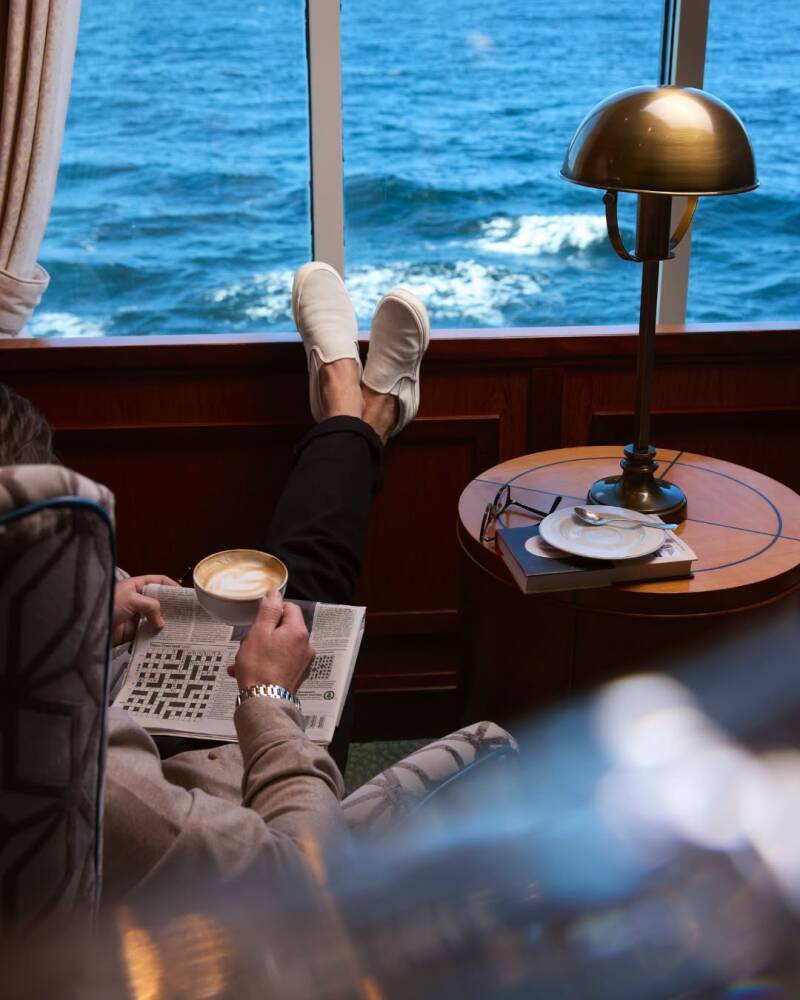
S — Sea Day: No port today! A sea day is your opportunity to slow down and actually enjoy the ship — pool time, spa treatments, leisurely lunches, entertainment or simply watching the ocean go by.
Solo Cabin: A stateroom designed specifically for one traveller. It can be a great option for solo cruisers looking to avoid hefty single supplements.
Stateroom: Cruise language for your room onboard — from cosy interior cabins to balcony staterooms and spectacular suites.
Starboard: The right-hand side of the ship when you’re facing forward.
Speciality Dining: Restaurants offering a different or more premium dining experience than the main included venues. An additional charge may apply.
T — Tender: Sometimes your ship is too large to dock directly in port. When this happens, smaller boats called tenders take passengers ashore.
Tipping / Gratuities: A contribution towards the crew who look after you onboard. Depending on your cruise fare, gratuities may already be included or charged separately.
Transatlantic Cruise: A voyage that crosses the Atlantic Ocean, typically sailing between Europe and North America.
U — Uniform: You’ll spot different uniforms throughout your voyage, worn by everyone from officers and chefs to housekeeping and hospitality crew.
Upper Deck: One of the higher levels of the ship, often home to pools, sun decks, sports areas and outdoor attractions.
V — Veranda: Your own private balcony or terrace — perfect for morning coffee with a sea view.
Voyage: Another word for your journey or sailing at sea.
W — Wake: That beautiful trail of water behind the ship as you sail. Some ships even have restaurants, bars and pools positioned to make the most of those aft-facing views.
World Cruise: The ultimate slow-travel adventure: an extended voyage spanning countries and continents, sometimes lasting several months. Don’t have months to spare? Many can be booked in shorter sections known as sectors.
Wave Season: A popular cruise-booking period, typically early in the year, when cruise lines often launch promotions and booking incentives.
X — X-Ray Machines: Cruise security works much like airport security. Expect screening when embarking and, on many sailings, when returning onboard after exploring a port.
Y — Yacht Cruising: Think smaller ships, fewer guests and more intimate journeys. Yacht-style vessels can often visit smaller ports that the mega-ships simply cannot reach.
Yacht Club: A premium ship-within-a-ship concept offered on some cruises, providing exclusive accommodation, dining, lounges and additional privileges.
Z — Zodiac: Small inflatable boats commonly used on expedition cruises to take guests closer to remote landscapes and wildlife, particularly in places such as Antarctica and the Arctic.
Zero-Proof: A term increasingly used for alcohol-free drinks and cocktails available onboard.
From mega-ships and Mediterranean sailings to intimate yachts, expedition voyages and world cruises, there’s much more than one way to cruise.
At Íjénjèm Travel, we help you navigate the options and find a sailing that fits your travel style — not simply the most popular ship.




Add comment
Comments